
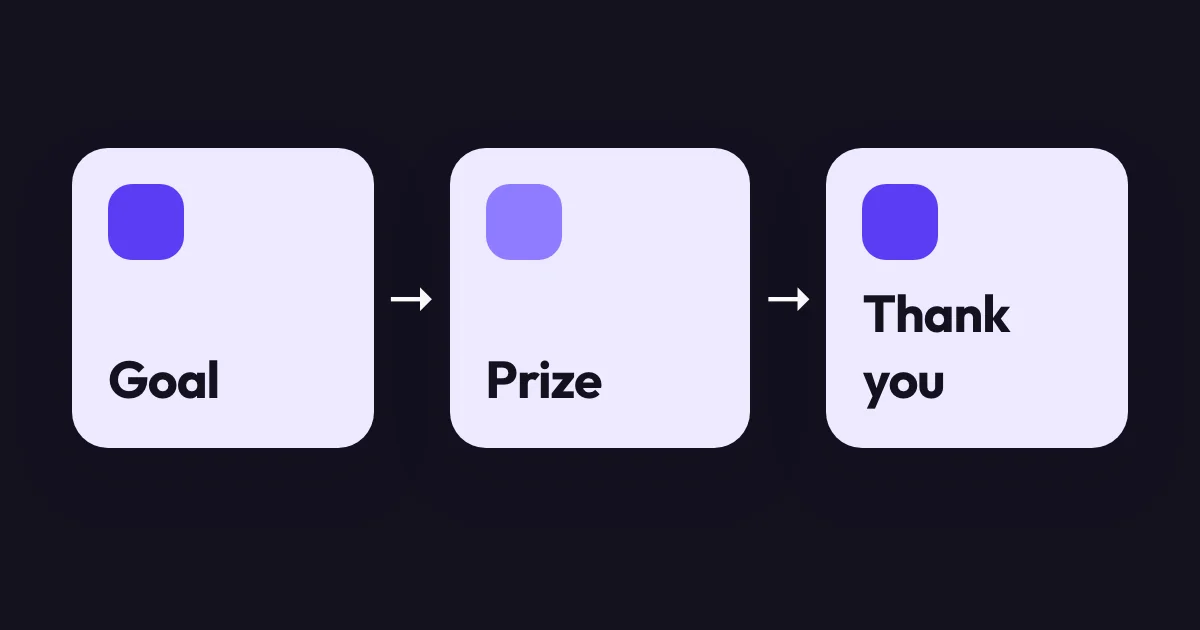
Giveaway marketing works best when you plan it like a small project, with one goal, a prize that fits and a follow-up that keeps new people around. By the end of this guide you will have a simple plan you can fill in for your own business, plus three hypothetical examples to copy from.
Start with one goal
A giveaway that tries to do everything usually does none of it well. Pick one thing you want more than anything else, and let it shape the rest.

Here are four goals that suit most small businesses.
- Awareness: more people who have never heard of you see what you do.
- A bigger email list: more people who give you permission to write to them.
- Trying a product: people who have not bought yet get a taste.
- Customer photos: people show your product in real life, so you have content to share.
Write your goal in one sentence, for example: “I want [number] new people on my email list by the time the giveaway closes.” Choose the number yourself, based on what would feel like a good result for your business. We are not going to promise you one.
How the goal changes everything else
Once you have a goal, three choices get easier.
- Awareness points to a simple entry, like a comment on one post, and a prize that is easy to talk about. Friends tagging friends spreads the word, so a comment and tag entry can fit. Our guide to giveaway entry methods compares the options.
- A bigger email list points to an optional sign-up step, a prize people will want enough to share their email for, and a plan to write to them afterwards.
- Trying a product points to a prize that is your product, in a size or version that shows it off, and a thank-you offer for everyone who enters.
- Customer photos points to an entry where people post their own photo or video with your product, and a clear note on how you may use what they share.
Notice what this does. You are not asking what is popular. You are asking what moves your business toward the one thing you chose.
Choose a prize your customers actually want
A prize decides who shows up. If you give away something your ideal customers would be glad to receive, the people who enter are more likely to be people who care about what you do.
Your own product or service
This is usually the strongest choice for a small business. It costs you less than its retail value, it introduces your work, and it attracts people who like what you make. A prize bundle that mixes a few of your products lets the winner try more of what you offer.
An unrelated prize
A big, unrelated prize, such as a popular gadget or a gift card to a large store, can bring many entries. But the entries may come from people who have no interest in your business. They enter for the prize, not for you, and they may leave once it is over. If your goal is awareness only, that can be fine. If your goal is customers, a closely related prize is a better fit.
A prize that fits your goal
- Goal is awareness: something eye-catching and easy to picture.
- Goal is email sign-ups: something worth the small effort of signing up.
- Goal is trying a product: a starter set or a sample bundle.
- Goal is customer photos: something people enjoy showing off, such as a product that looks good on camera.
Think about the budget
Add up what the giveaway will cost you before you announce it. Use placeholders until you know your real numbers.
- Cost of making or buying the prize: [prize cost]
- Packaging: [packaging cost]
- Shipping, if you ship: [shipping cost]
- The thank-you offer for everyone, if you plan one: [offer cost per redemption]
- Your time to run the giveaway and follow up: [hours]
Decide in advance the most you are willing to spend. If the total is above it, make the prize smaller, give it to one winner instead of three, or limit it to local entrants. Our guide to giveaway prize shipping covers what to include when you plan postage, packaging and the odd lost parcel.
Set up entry mechanics that match your goal
Fewer steps usually work better, so only add a step that serves your goal. Here is how that looks by goal.
Awareness
Ask for one comment on one post. Optionally, ask people to tag a friend who would enjoy the prize. Keep the post clear and short so anyone can follow it.
A bigger email list
Offer a comment entry, and add a sign-up as an optional extra, or make the sign-up the entry and say so clearly. Whichever you pick, state it plainly in the rules: what people are signing up for, what you will send and how they can leave. Privacy and consent rules vary by region, and this is not legal advice, so check what applies where you operate.
Trying a product
Ask a simple question tied to the product: “Which flavor, color or scent would you try first?” It is a light way to enter, and the answers tell you which products people are curious about.
Customer photos
Ask people to post a photo or video with your product and tag your business. Say in the rules whether you may reshare entries, and ask permission before you reuse anyone’s photo.
For more on promotion in general, see our guide to how to promote a giveaway before, during and after it runs.
Keep freebie hunters out, within reason
Some people enter every giveaway they see. You cannot stop them completely, and you do not need to. These practical steps help you attract people who are actually interested in your business.
- Make the prize about your business. A bundle of your products is less interesting to a person who does not care about them.
- Ask for a small, relevant action. A question about your products tells you more than a single word.
- Write rules you can check. Following and liking do not show up in a comment list, so a comment-based draw cannot verify them. Do not make rules you cannot enforce.
- Remove duplicates and your own accounts. Several comments from the same person should count as one entry, and your team’s accounts should not be in the draw. A picker like TweetGift can do both from a pasted post link.
- Say who can enter. State the region, any age limit and the closing time.
Being honest and clear tends to do more good than chasing the perfect filter. Accept that a few entrants will only be there for the prize, and plan your follow-up for the people who stay.
Track your own numbers
You do not need a dashboard. You need a note you update three times.
- Before: write down the numbers that matter to your goal: followers, email subscribers, product sales or photos tagged this month.
- During: check in on the same numbers mid-giveaway and at the close.
- After: look again a week and a month later.
Then compare them yourself. Did the number you picked move? By how much? Did it stay up after the giveaway ended? Those answers are specific to your business. They are better than any general figure, and you cannot get them from a guide like this one.
Be careful with cause and effect. Other things change at the same time, such as the season, a new product or a sale. Note those too, so you do not give the giveaway credit it did not earn.
Follow up: where the value is
The draw is not the end. What you do next decides whether the giveaway was a one-off or a start.
Welcome new followers
Post a short hello that says who you are and what you share. A new follower should see what to expect quickly, and a friendly pinned post helps.
Thank everyone
A thank-you offer for all entrants, such as a small discount or a free sample with an order, gives everyone who did not win a reason to visit. Keep it simple, set an end date, and make sure you can honor it. If you promise it, deliver it.
Keep your promises
Announce the winner on time and send the prize as you said you would. Our post on how to announce giveaway winners has templates for this. If you promised an email, send it. If you said entrants would hear from you, do not stay silent for months and then surprise them.
Talk about the giveaway afterwards
Share a short recap: how many people entered, who won, and a thank-you. You can show the winner receiving their prize if they agree. Be honest. Do not claim results you did not see, and do not describe the giveaway as bigger than it was.
Three example plans
These are hypothetical examples to show how the pieces fit. Change them to suit your own business.
Example 1: a neighborhood bakery
- Goal: awareness among nearby residents.
- Prize: a box of [number] pastries, ready for pick-up at the shop, so no shipping.
- Entry: comment on one post and tag a friend who would share the box.
- Eligibility: entrants who can collect in person.
- Follow-up: a thank-you offer for everyone: “[offer] when you mention this giveaway before [date]”. A post introducing the bakery’s most popular items to new followers.
Example 2: a fitness studio
- Goal: trying the service, so people come in for a first class.
- Prize: a [number]-class pass for one winner.
- Entry: comment with the class you would try first.
- Eligibility: people who live near the studio.
- Follow-up: a free trial class offer for every entrant, with a booking link. A welcome message explaining where to start. Be careful about health claims, and keep your language about what people will get to the facts of what you offer.
Example 3: an online shop
- Goal: a bigger email list.
- Prize: a bundle of [product] items, shipped to the winner.
- Entry: comment on one post. A separate, clearly optional sign-up for the email list, explained in the rules.
- Eligibility: the regions you already ship to.
- Follow-up: a welcome email to subscribers, a thank-you code for everyone, and a recap post with the winner announcement.
For a way to widen your audience with a partner, our guide to running a joint giveaway shows how to share the work and the prize.
Cautions before you launch
- Platform rules. Each platform has its own promotion rules, and they change. Read the current ones before you post.
- Local law. Rules on promotions, prize draws and contests vary by country and region. This guide is not legal advice. If the prize is valuable, take extra care and check what applies to you.
- Customer data. Use entrant details only for running the giveaway, unless people clearly agreed to more. Say what you collect and why.
- Independence. Giveaways are not sponsored by, endorsed by or connected to the platforms they run on. State that in your rules.
- Fair draw. Keep a record of the draw. Our guide to giveaway rules shows what to write down.
Run a draw people can trust
Paste your post link, set your rules and pick a random winner. Free for one winner from up to 300 comments.